The ODOT Highway Design Manual guides consistent‚ safe‚ and efficient roadway development in Ohio‚ blending historical precedent with modern engineering practices.
Purpose and Scope
The primary purpose of the ODOT Highway Design Manual is to establish uniform standards and procedures for the planning and design of Ohio’s transportation infrastructure. This manual serves as a comprehensive resource for ODOT staff‚ consultants‚ and other stakeholders involved in highway projects.
Its scope encompasses all phases of highway design‚ from preliminary engineering to final construction plans. It covers geometric design‚ pavement design‚ drainage‚ traffic engineering‚ safety features‚ and bridge considerations. The manual aims to ensure that all projects adhere to accepted engineering principles‚ relevant codes‚ and ODOT’s specific requirements‚ ultimately delivering a safe and reliable transportation system for the public.
History and Evolution of the Manual
The ODOT Highway Design Manual has undergone significant evolution since its inception‚ reflecting advancements in engineering practices and changes in transportation needs. Initially‚ design standards were largely based on guidelines from the American Association of State Highway and Transportation Officials (AASHTO).
Over time‚ ODOT incorporated research findings‚ lessons learned from project implementation‚ and feedback from industry professionals to refine the manual. Updates have addressed areas like roadway safety‚ environmental sustainability‚ and innovative design techniques. The manual’s continuous improvement ensures it remains a relevant and effective tool for delivering a modern and efficient transportation network throughout Ohio.
Geometric Design Standards
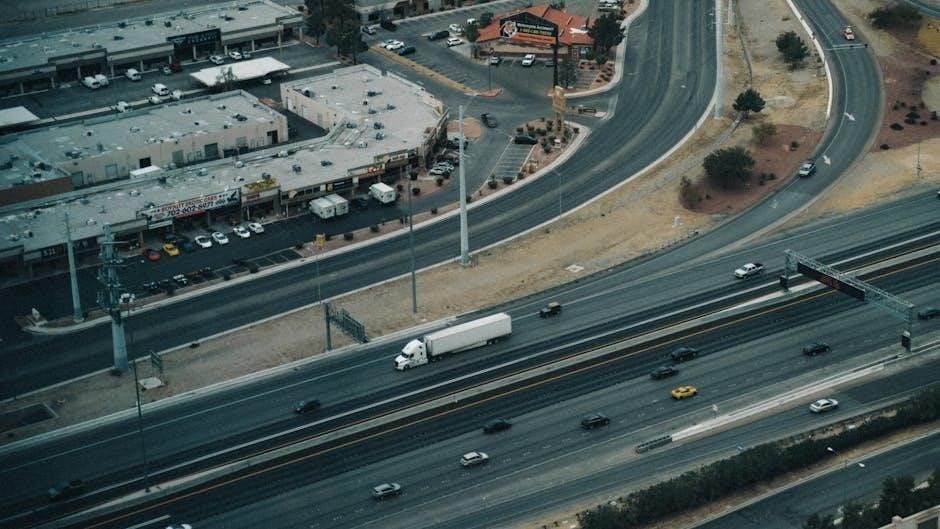
ODOT’s geometric design standards prioritize driver safety and operational efficiency‚ defining critical elements like lane widths‚ curve radii‚ and vertical alignment.
Design Speed and Consistency
Establishing appropriate design speeds is fundamental to ODOT’s geometric design philosophy. These speeds aren’t simply posted limits‚ but rather represent the maximum safe speed for vehicles traversing a roadway segment‚ considering factors like horizontal curvature and sight distance. Consistency is paramount; abrupt changes in design speed create driver discomfort and increase crash risk.
ODOT’s manual emphasizes maintaining a logical progression of design speeds throughout a project. This involves carefully analyzing existing conditions and future traffic projections to select speeds that balance safety‚ operational efficiency‚ and cost-effectiveness. The manual provides detailed guidance on determining appropriate design speeds for various roadway classifications and terrain types‚ ensuring a harmonious driving experience for all users.
Horizontal Alignment Design
ODOT’s manual provides comprehensive guidance for designing horizontal curves‚ focusing on minimizing driver workload and maximizing safety. Key considerations include curve radius‚ length of curve‚ and the use of spiral transitions to gradually introduce and remove centrifugal forces. Detailed tables and charts assist engineers in selecting appropriate design parameters based on design speed and roadway classification.
The manual stresses the importance of considering driver expectancy and sight distance requirements when laying out horizontal alignment. Clear zone considerations also play a crucial role‚ ensuring adequate space for drivers to recover from errors. Software tools and design checks are recommended to verify compliance with ODOT standards and best practices.
Superelevation Design
ODOT’s manual details superelevation – banking of curves – as a critical element in horizontal alignment design. It balances centrifugal forces with gravity‚ enhancing driver comfort and safety. The manual specifies maximum and minimum superelevation rates based on design speed‚ ensuring a smooth transition through curves.
Runout lengths‚ the distance over which superelevation is applied‚ are carefully calculated to avoid abrupt changes in roadway geometry. Detailed guidance is provided on handling compound curves and reverse curves‚ minimizing potential hazards. The manual emphasizes the importance of consistent superelevation design throughout the roadway network for driver familiarity and reduced risk.
Vertical Alignment Design
ODOT’s Highway Design Manual provides comprehensive guidelines for establishing vertical alignment‚ focusing on grade criteria and sight distance. Minimum and maximum grades are specified‚ considering vehicle performance and safety. The manual details procedures for calculating stopping sight distance‚ decision sight distance‚ and passing sight distance‚ ensuring adequate visibility for drivers.
Vertical curves – crest and sag – are meticulously addressed‚ with specific length requirements to maintain driver comfort and sight distance. Guidance is given on managing grades near intersections and railroad crossings. The manual stresses the importance of balancing cut and fill volumes while prioritizing safety and operational efficiency in vertical alignment design.
Grade Criteria and Sight Distance
ODOT’s manual establishes maximum grades based on design speed and terrain‚ balancing construction costs with vehicle performance. Minimum grades ensure adequate drainage and prevent vehicle rollback. Critical to safety‚ sight distance calculations – stopping‚ passing‚ and decision – dictate alignment geometry.
The manual details formulas and procedures for determining required sight distance‚ factoring in vehicle characteristics‚ driver perception-reaction time‚ and roadway conditions. Vertical curve design directly impacts sight distance; length calculations must guarantee adequate visibility. Exceptions to standard criteria require justification and approval‚ prioritizing safety and operational needs.

Pavement Design
ODOT’s manual details both flexible (asphalt) and rigid (concrete) pavement structures‚ considering traffic loads‚ climate‚ and subgrade conditions for durability.
Flexible Pavement Design
ODOT’s guidelines for flexible pavement emphasize a layered system‚ typically including subgrade‚ subbase‚ base‚ and surface courses. The manual provides detailed procedures for determining appropriate layer thicknesses based on anticipated traffic volumes – expressed as Equivalent Single Axle Loads (ESALs) – and regional climatic factors.
Material selection is crucial‚ with specifications covering asphalt binder grades‚ aggregate quality‚ and mixture design considerations. Emphasis is placed on achieving adequate pavement strength‚ fatigue resistance‚ and resistance to rutting and cracking. The design process incorporates considerations for drainage‚ ensuring water doesn’t compromise the pavement structure’s integrity.
ODOT also specifies testing protocols to verify material properties and construction quality‚ ensuring long-term performance and minimizing life-cycle costs.
Rigid Pavement Design
ODOT’s approach to rigid pavement design‚ primarily utilizing Portland Cement Concrete (PCC)‚ centers on ensuring sufficient structural capacity to withstand anticipated wheel loads and environmental stresses. The manual details methods for calculating slab thickness‚ considering concrete strength‚ subgrade support‚ and joint spacing.
Key design factors include minimizing cracking due to shrinkage and temperature variations‚ and providing adequate load transfer efficiency across joints. ODOT specifies concrete mix designs with particular attention to durability‚ freeze-thaw resistance‚ and resistance to alkali-silica reaction.
Detailed guidance is provided on reinforcement requirements‚ including the use of steel fibers and dowel bars‚ to enhance pavement performance and extend service life.
Joint Design Considerations
ODOT’s manual emphasizes meticulous joint design in rigid pavements to manage stresses and prevent premature deterioration. Longitudinal and transverse joints are addressed‚ detailing appropriate spacing based on slab thickness and anticipated loads. Control joints are crucial for inducing planned cracking‚ minimizing random‚ uncontrolled fissures.
The manual specifies requirements for joint sealing materials‚ focusing on durability‚ flexibility‚ and resistance to water intrusion. Dowels are essential for load transfer across joints‚ with guidance on diameter‚ length‚ and placement.
Consideration is given to joint faulting‚ and methods for mitigation‚ including proper subgrade support and effective drainage‚ are outlined to ensure long-term pavement performance;
Drainage Design
ODOT’s manual prioritizes effective highway drainage systems‚ encompassing storm sewer networks and culvert designs‚ to ensure roadway stability and safety.
Storm Sewer Systems
ODOT’s Highway Design Manual details comprehensive guidelines for storm sewer system design‚ crucial for managing stormwater runoff and preventing roadway flooding. These systems must accommodate anticipated rainfall intensities‚ considering factors like drainage area‚ soil permeability‚ and pavement characteristics.
The manual specifies requirements for pipe sizing‚ material selection‚ inlet and outlet structures‚ and energy dissipation measures. Proper design incorporates considerations for minimizing maintenance‚ preventing erosion‚ and protecting water quality. Detailed hydraulic calculations are essential‚ ensuring adequate capacity to convey peak flows safely. Furthermore‚ the manual emphasizes the importance of integrating storm sewer systems with other highway features‚ like embankments and bridges‚ to maintain overall structural integrity and functionality.
Culvert Design
The ODOT Highway Design Manual provides extensive guidance on culvert design‚ vital for safely conveying water under roadways while maintaining embankment stability. Culvert selection considers factors like hydraulic capacity‚ headwater elevation‚ material durability‚ and site-specific conditions.
The manual details procedures for determining appropriate culvert size and shape‚ encompassing circular‚ elliptical‚ and box culverts. Emphasis is placed on preventing erosion‚ scour‚ and undermining of the culvert structure. Proper inlet and outlet protection are crucial‚ utilizing features like headwalls‚ wingwalls‚ and riprap. Hydraulic analysis‚ including energy loss calculations‚ is paramount to ensure adequate flow capacity and prevent upstream flooding. Careful consideration of fish passage requirements is also addressed within the guidelines.
Hydraulic Analysis of Culverts
The ODOT Highway Design Manual mandates rigorous hydraulic analysis for all culvert designs‚ utilizing accepted methodologies like the Hydraulic Design Series (HDS) No. 5. This analysis determines the culvert’s capacity to convey design storm runoff without overtopping the roadway or causing upstream flooding.
Calculations must account for inlet control‚ outlet control‚ and tailwater conditions. Energy losses due to entrance and exit transitions‚ as well as friction within the culvert barrel‚ are carefully evaluated. The manual specifies appropriate roughness coefficients for various culvert materials. Detailed reporting of hydraulic calculations‚ including assumptions and supporting data‚ is required for plan review and approval‚ ensuring compliance with safety and environmental regulations.
Traffic Engineering Considerations
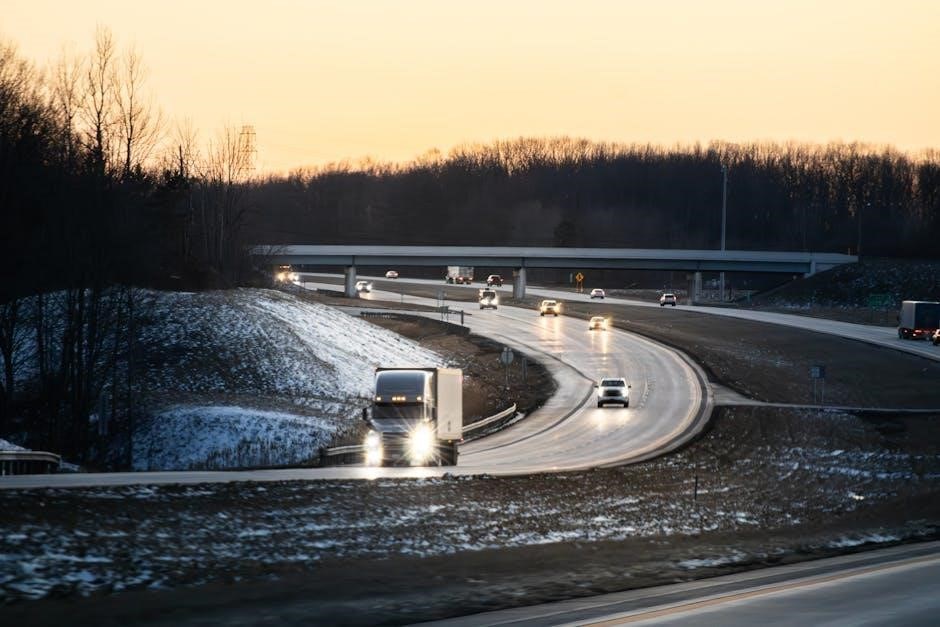
The ODOT Highway Design Manual prioritizes traffic flow and safety through lane width standards‚ shoulder design‚ and access management strategies for optimal roadway performance.
Lane Width and Shoulder Design
The ODOT Highway Design Manual meticulously details lane width and shoulder specifications‚ crucial for accommodating diverse vehicle types and volumes. Standard lane widths are established‚ factoring in design speed and functional classification. Shoulder widths are determined by roadway context – rural versus urban – and the need for recovery space‚ emergency stopping‚ and pedestrian/bicycle accommodation.
Shoulder design considers pavement type‚ drainage requirements‚ and potential for future expansion. The manual emphasizes consistent shoulder widths within a project and along continuous sections of roadway. Detailed guidance is provided for paved‚ gravel‚ and unpaved shoulders‚ including slope considerations and edge treatments to enhance stability and safety. Proper lane and shoulder design directly contributes to reduced crash rates and improved operational efficiency.
Access Control and Management
The ODOT Highway Design Manual prioritizes access control and management to maintain highway capacity and safety. It outlines classifications of public roads‚ dictating permissible access points and connection types. Limited access freeways minimize direct connections‚ utilizing interchanges for controlled entry and exit. The manual details standards for interchange spacing‚ ramp design‚ and auxiliary lanes to facilitate smooth traffic flow.
For roadways with partial control of access‚ regulations govern driveway locations‚ sight distance requirements‚ and turning movements. The manual emphasizes the importance of minimizing conflicts between through traffic and accessing vehicles. Effective access management strategies reduce congestion‚ improve safety‚ and preserve the long-term investment in the highway infrastructure.
Interchange Design Standards
The ODOT Highway Design Manual provides detailed standards for various interchange types‚ including diamond‚ cloverleaf‚ and diverging diamond interchanges (DDIs). Geometric design elements like ramp lengths‚ curvature‚ and grades are rigorously specified to ensure operational efficiency and safety. Detailed guidance covers lane configurations‚ weaving distances‚ and acceleration/deceleration lane lengths.
The manual emphasizes the importance of considering future traffic volumes when designing interchanges. It outlines requirements for auxiliary lanes to accommodate weaving movements and reduce congestion. Signage and pavement markings are also addressed‚ ensuring clear guidance for drivers navigating the interchange. ODOT’s standards prioritize minimizing conflicts and maximizing throughput.

Safety Features
ODOT’s manual prioritizes roadway safety through detailed specifications for guardrails‚ clear zones‚ and roadside hazard mitigation‚ including safety audits.
Guardrail and Barrier Systems
The ODOT Highway Design Manual provides comprehensive guidance on the selection‚ design‚ and installation of guardrail and barrier systems. These systems are crucial for preventing vehicle departures from the roadway and mitigating the severity of crashes. The manual details specific requirements based on hazard level‚ traffic volume‚ and roadway geometry.
Detailed specifications cover various types of guardrails‚ including W-beam‚ box beam‚ and cable barriers. Emphasis is placed on proper end treatments to redirect vehicles safely. The manual also addresses the use of concrete barriers in high-speed or high-volume traffic areas‚ outlining design considerations for shape and height. Furthermore‚ it references relevant crash testing standards to ensure system performance and compliance with federal safety regulations.
Clear Zone Considerations
The ODOT Highway Design Manual dedicates significant attention to clear zone requirements‚ defining the traversable area beyond the roadway edge. This zone must be free of hazardous obstacles to minimize injury potential if a vehicle leaves the traveled way. The manual specifies clear zone widths based on design speed and traffic volume‚ acknowledging increased risks at higher speeds.
Guidance covers the treatment of existing features within the clear zone‚ such as trees‚ utility poles‚ and drainage structures. Acceptable mitigation strategies include relocation‚ breakaway designs‚ or shielding. Roadside Safety Audits‚ as detailed within the manual‚ are essential for identifying and addressing potential hazards. The goal is to create a forgiving roadside environment‚ reducing the likelihood of severe crashes and enhancing overall highway safety.
Roadside Safety Audits
The ODOT Highway Design Manual emphasizes Roadside Safety Audits (RSAs) as a proactive safety assessment tool. These independent‚ systematic evaluations identify potential hazards along roadways before construction or reconstruction. RSAs involve a multidisciplinary team reviewing design plans and field conditions to pinpoint areas needing improvement.
The manual details the RSA process‚ including team composition‚ audit scope‚ and reporting requirements. Key focus areas include clear zone deficiencies‚ fixed-object hazards‚ and potential conflicts between vehicles and pedestrians. Findings are documented with recommendations for mitigation‚ ensuring a safer roadside environment. Regular RSAs are crucial for continuous safety enhancement throughout the highway lifecycle‚ aligning with ODOT’s commitment to zero deaths.

Bridge Design Considerations (Referenced within ODOT Manual)
The ODOT Highway Design Manual directs users to supplementary bridge design specifications‚ focusing on load ratings‚ structural capacity‚ and durability standards.
Load Rating and Capacity
Determining bridge load ratings is a critical component of the ODOT Highway Design Manual’s referenced bridge design standards. These ratings‚ essential for safe operation‚ define the maximum legal loads a bridge can carry‚ considering both current and future traffic demands.
Capacity calculations involve detailed structural analysis‚ accounting for material properties‚ geometry‚ and potential deterioration. ODOT utilizes established methodologies‚ like those outlined in the AASHTO LRFD Bridge Design Specifications‚ to ensure accuracy and consistency.
The manual emphasizes regular inspections and reassessments to maintain accurate load ratings throughout a bridge’s service life. This proactive approach safeguards public safety and optimizes infrastructure investment‚ preventing costly repairs or replacements.

Environmental Considerations
ODOT’s manual prioritizes minimizing highway impacts‚ focusing on stormwater management‚ noise reduction strategies‚ and crucial provisions for wildlife passage solutions.
Stormwater Management
The ODOT Highway Design Manual dedicates significant attention to stormwater management‚ recognizing its critical role in protecting water quality and preventing erosion. It emphasizes the implementation of Best Management Practices (BMPs) throughout the project lifecycle‚ from initial planning to construction and long-term maintenance. These practices include detention basins‚ infiltration trenches‚ and vegetated swales designed to control runoff volume and pollutant loads.
The manual details requirements for hydraulic modeling to accurately assess stormwater flows and ensure adequate capacity of drainage structures. Emphasis is placed on minimizing impacts to existing streams and wetlands‚ often requiring mitigation measures to offset unavoidable disturbances. ODOT’s approach aligns with federal and state regulations‚ promoting sustainable and environmentally responsible highway construction and operation.
Noise Mitigation
The ODOT Highway Design Manual addresses noise impacts from transportation facilities‚ prioritizing the well-being of communities adjacent to roadways. It outlines procedures for noise studies to identify sensitive receptors – residences‚ schools‚ hospitals – potentially affected by traffic noise. These studies predict noise levels and determine if mitigation measures are warranted‚ based on established thresholds.
Common mitigation strategies detailed in the manual include constructing noise barriers (walls or earthen berms)‚ utilizing pavement materials that reduce tire-pavement noise‚ and implementing operational controls like speed reductions. The manual also considers land use planning and building design to minimize noise exposure‚ promoting a balance between transportation needs and community quality of life.
Wildlife Crossings
The ODOT Highway Design Manual recognizes the impact of roadways on wildlife movement and incorporates strategies to minimize fragmentation of habitats. It emphasizes identifying areas with high wildlife crossing potential through ecological surveys and data analysis. The manual details various crossing structures‚ including overpasses‚ underpasses‚ and culverts specifically designed to facilitate safe passage for animals.
Design considerations include appropriate size‚ placement‚ and landscaping to attract wildlife use. ODOT prioritizes connectivity for species ranging from small mammals to large ungulates‚ reducing wildlife-vehicle collisions and maintaining ecological integrity. The manual also promotes collaboration with wildlife agencies to ensure effective crossing implementation and monitoring.
Construction Considerations
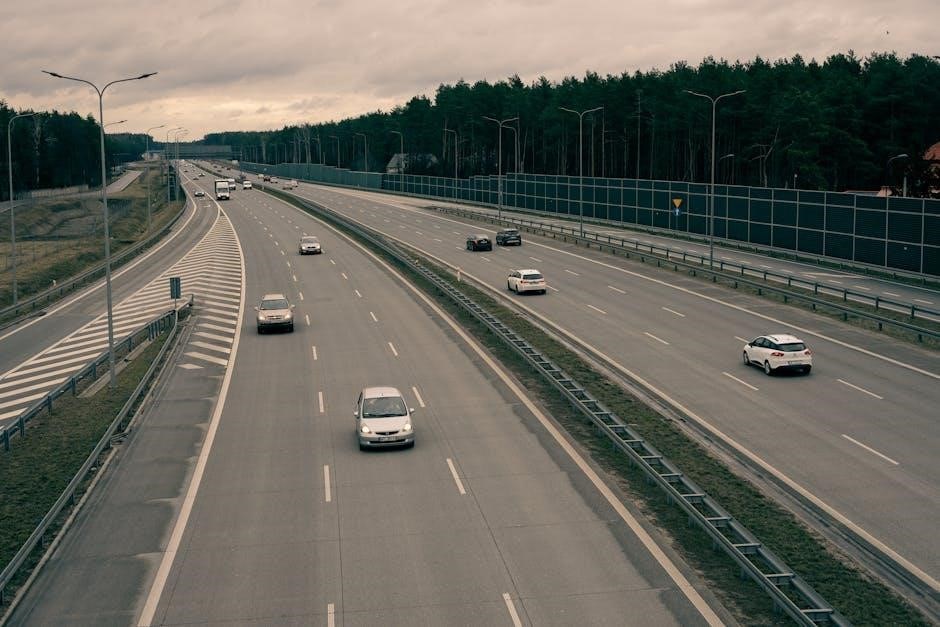
The ODOT Highway Design Manual stresses meticulous traffic control during construction‚ alongside robust quality control and assurance protocols for project longevity.
Traffic Control During Construction
The ODOT Highway Design Manual dedicates significant attention to maintaining traffic flow and safety throughout construction phases. Detailed plans are required‚ outlining lane closures‚ detour routes‚ and signage placement‚ all adhering to MUTCD standards. Emphasis is placed on minimizing disruptions to the traveling public while protecting construction workers.
Temporary traffic control devices must be regularly inspected and maintained. Phasing of construction activities is crucial‚ coordinating work to reduce congestion. Public communication regarding closures and delays is paramount‚ utilizing various channels like websites‚ social media‚ and local news. Proper flagger training and implementation are also essential components of a safe construction zone.
Quality Control and Assurance
The ODOT Highway Design Manual stresses a robust Quality Control/Quality Assurance (QC/QA) program throughout all project phases. This encompasses material testing‚ inspection of workmanship‚ and documentation to verify compliance with specifications. Independent testing laboratories play a vital role‚ providing unbiased assessments of material properties.
Regular audits and reviews are conducted to identify potential deficiencies and implement corrective actions. Detailed record-keeping is mandatory‚ tracking all testing results and inspection reports. Acceptance criteria are clearly defined‚ ensuring that only materials and work meeting ODOT standards are approved. This systematic approach guarantees a durable and reliable transportation infrastructure.

Appendix and Resources
The ODOT Highway Design Manual includes vital references to current codes‚ standards‚ and readily accessible ODOT-specific design resources for practitioners;
Relevant Codes and Standards
The ODOT Highway Design Manual meticulously references a comprehensive suite of governing codes and standards essential for compliant and safe highway projects. These include‚ but aren’t limited to‚ the AASHTO (American Association of State Highway and Transportation Officials) A Policy on Geometric Design of Highways and Streets‚ providing foundational geometric principles.
Furthermore‚ the manual incorporates guidelines from the Manual on Uniform Traffic Control Devices (MUTCD) for consistent traffic management. Ohio-specific regulations‚ building codes‚ and environmental standards are also integrated‚ ensuring projects align with state and federal legal requirements. Regular updates reflect revisions to these external standards‚ maintaining the manual’s relevance and promoting best practices in highway engineering.
ODOT Design Resources
The Ohio Department of Transportation (ODOT) provides extensive resources to support engineers utilizing the Highway Design Manual. These include detailed design files‚ standard drawings‚ and specialized software tools accessible through the ODOT website;
Furthermore‚ ODOT offers comprehensive training programs and workshops covering various aspects of highway design‚ ensuring engineers remain proficient in applying the manual’s guidelines. A dedicated support team is available to address technical questions and provide guidance on complex design challenges. Access to research reports‚ previously completed project data‚ and best practice summaries further enhances the resources available to ODOT project teams.
